

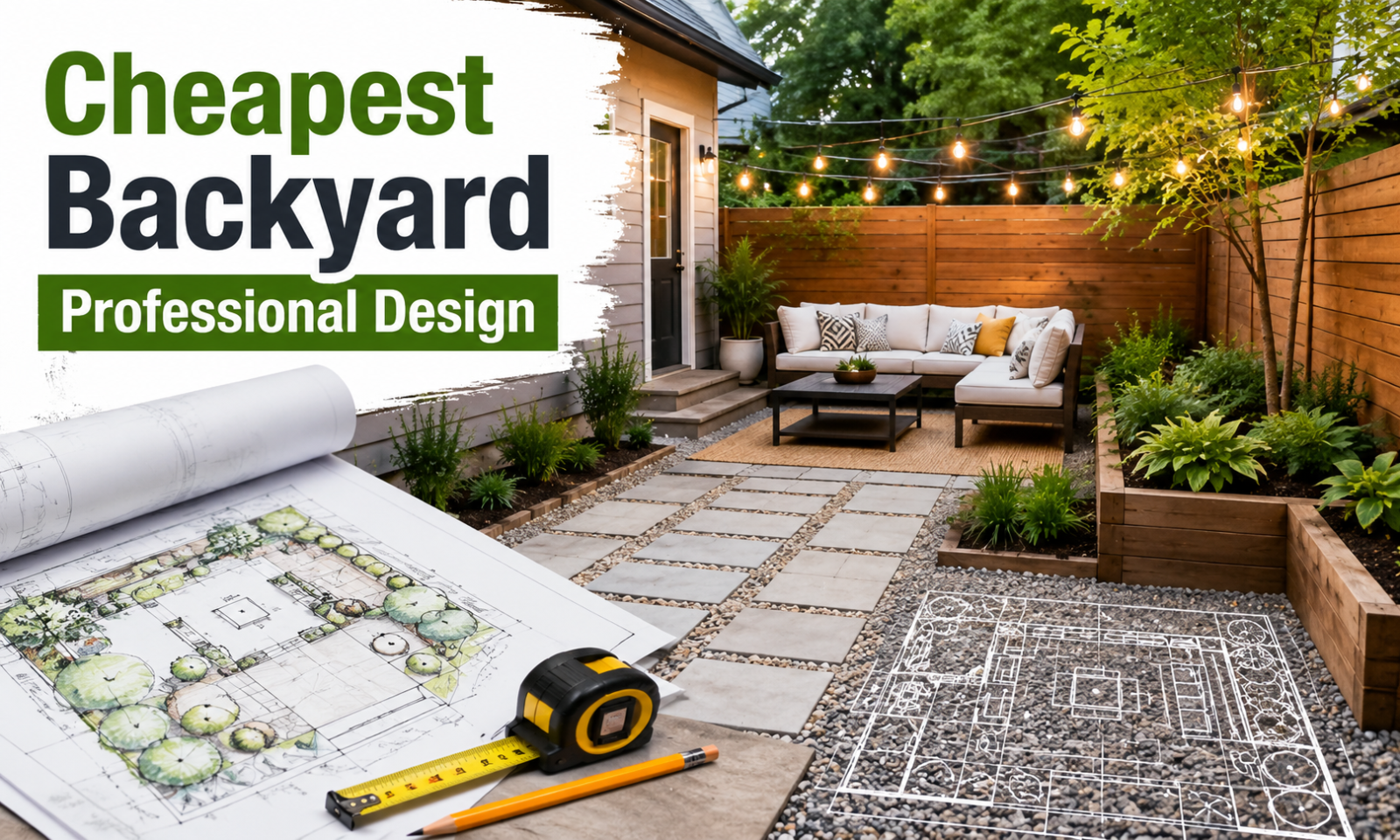
Most people assume a professional-looking yard means expensive plants and a big landscaping bill. It does not.
Here is the secret that landscape designers know and rarely say out loud: what makes a yard look “designed” is not the plants. It is the structure. Clean edges, repeated groupings, and defined spaces. And structure is cheap.
You are not paying a designer for rare shrubs. You are paying for the plan. Copy the plan, and you get the look for a fraction of the cost.
The cheapest way to make a backyard look professionally designed is to add structure, not expensive plants. Five moves do most of the work: crisp bed edging with fresh dark mulch, repeating the same few plants in odd-numbered groups, dividing the yard into defined zones, adding one strong focal point, and lighting it with string and solar lights. Together these cost very little and deliver the “intentional” look that separates a designed yard from a messy one.
Why do cheap yards look cheap?
Understanding the problem points straight to the fix.
A yard looks messy and unplanned when everything blends together with no clear boundaries. Beds bleed into lawn. Random single plants sit scattered around. Nothing draws the eye. The brain reads that as chaos.
A yard looks professionally designed when it has clean lines, defined areas, and repetition. The brain reads that as order and intention. That is the whole game.
Landscaping is visual psychology. Clean lines, healthy plants, and intentional design matter far more than expensive materials. Which is great news for your budget.
Move 1: Crisp edging and fresh mulch (the biggest bang for your buck)
If you do only one thing, do this. It is the single highest-impact, lowest-cost transformation in the entire yard.
Define your garden beds with a clean, cut edge or simple edging, then fill them with fresh dark mulch. The effect is night and day. The dark mulch creates rich contrast against green plants and lawn, and the defined border instantly makes the beds look deliberate and cared for.
How to do it cheaply:
- Cut a clean edge along beds with a spade, or add inexpensive edging: stones, brick, or steel.
- Lay fresh, dark mulch a couple of inches deep. Bags are cheap; bulk is cheaper.
- Keep lines smooth and simple. Use a garden hose to lay out gentle curves before you cut.
This one move alone makes many yards look professionally maintained for the price of mulch and an afternoon.
Move 2: Repeat, do not scatter (the rule of three)
This is the free professional secret that changes how a yard reads.
Amateurs buy ten different plants and dot them around. Designers pick a few plants and repeat them in groups. Repetition builds cohesion. Your eye finds repeated, grouped plantings calm and balanced. Scattered variety looks like clutter.
Two rules to apply:
- Plant in odd numbers. Group plants in threes or fives, not ones and twos. Odd-numbered clusters look more natural and balanced. This is the classic “rule of three.”
- Repeat the same cluster. Choose three plants you love and repeat those groupings around the yard, rather than buying many different ones. You spend less and get a more polished, unified result.
Mix textures within a grouping, like fine feathery foliage next to broad leaves, and keep to one flower color repeated rather than a rainbow scattered randomly.
Move 3: Create zones (instant structure)
A backyard looks messy when it is one undefined blob. It looks sophisticated when it is divided into clear areas.
Create separate zones for seating, dining, planting beds, and pathways. Even a small yard benefits, because defined spaces make the whole area feel thoughtfully planned. This is what designers mean by “outdoor rooms.”
Cheap ways to define zones:
- A gravel patio or path to mark a seating or walking area. Gravel costs a fraction of pavers, drains well, and looks stylish.
- Stepping stones or a simple flat-stone walkway to connect areas.
- Bed borders to separate planting from lawn.
- An outdoor rug to anchor a seating zone.
Do not try to redesign the whole yard. Prioritize two or three strategic zones and do them well. Spreading a small budget across the entire yard leaves everything looking thin.
Move 4: Add one focal point
A designed yard gives the eye somewhere to land. Without a focal point, the gaze wanders and the space feels aimless.
Pick one and make it the star:
- A DIY stone fire pit built from affordable landscaping or retaining-wall blocks.
- A raised flower bed from stone, brick, or wood, which adds color, height, and structure.
- A specimen tree or a large planter.
- A small water feature, which doubles as pleasant background sound.
One strong focal point per zone is plenty. It signals intention immediately.
Move 5: Light it (resort feel, tiny cost)
Without lighting, even a nice yard looks unfinished after dark. With it, the space feels like a resort.
- String lights draped over a patio, seating area, or between posts create a warm glow that makes the yard feel inviting and designed. They are one of the most affordable upgrades there is.
- Solar pathway lights add charm and highlight your zones with zero effect on the electricity bill.
Together, these mimic the look of an expensive landscape lighting system for very little.
The cheap-to-pro checklist
| Move | Rough cost | Impact |
|---|---|---|
| Crisp edging plus fresh mulch | Low | Very high |
| Repeat plants in odd groups | Low (fewer plants) | High |
| Define two or three zones | Low to medium | High |
| One focal point | Low to medium | High |
| String and solar lights | Low | High |
| Tidy lawn and bed borders | Free | Medium |
Do not overlook the free move: tidy up
Before spending anything, clean up. It is surprising how much a good tidy changes a yard’s whole appearance.
- Edge and trim the lawn borders.
- Prune overgrown shrubs back into shape.
- Remove weeds, dead plants, and clutter.
- Sweep paths and patios.
Crisp borders and healthy, well-kept plants read as professional on their own, and this costs only your time.
A quick word on plant choice
Spend smart on plants, too.
- Evergreens like boxwood give year-round structure and a formal, professional look with little maintenance.
- Choose plants suited to your light and climate so they stay healthy, since healthy plants look designed and struggling ones look neglected.
- Favor low-maintenance layouts that need less trimming and watering, so the yard keeps looking good and saves you money every season.
Frequently asked questions
What is the cheapest way to make a yard look professionally landscaped?
Crisp bed edging with fresh dark mulch. Defining the beds and adding dark mulch creates instant contrast and an intentional look for the price of mulch and an afternoon of work. It is the highest-impact, lowest-cost move there is.
What is the rule of three in landscaping?
Grouping plants or design elements in odd numbers, usually threes. Odd-numbered clusters look more natural and balanced than pairs or single scattered plants, and repeating the same grouping builds a cohesive, designed look.
How do I make a messy backyard look intentional?
Add structure. Define zones for seating, dining, and beds, edge and mulch the beds, repeat a few plants in groups instead of scattering many, and add one focal point. Structure is what separates a designed yard from a chaotic one.
Do string lights really make a backyard look more expensive?
Yes. String lights and solar path lights create a warm, resort-like glow that makes a yard feel finished and inviting after dark, mimicking pricey landscape lighting for a small cost.
Should I spend my budget on the whole yard or one area?
Focus on two or three strategic zones and do them well. Spreading a small budget across the entire yard leaves everything looking thin, while a few finished areas make the whole space feel designed.