Tag: hardware store

  • Lowe’s Home Improvement: Stores, Products, Services, and What to Know Before You Shop

    Lowe’s Home Improvement: Stores, Products, Services, and What to Know Before You Shop

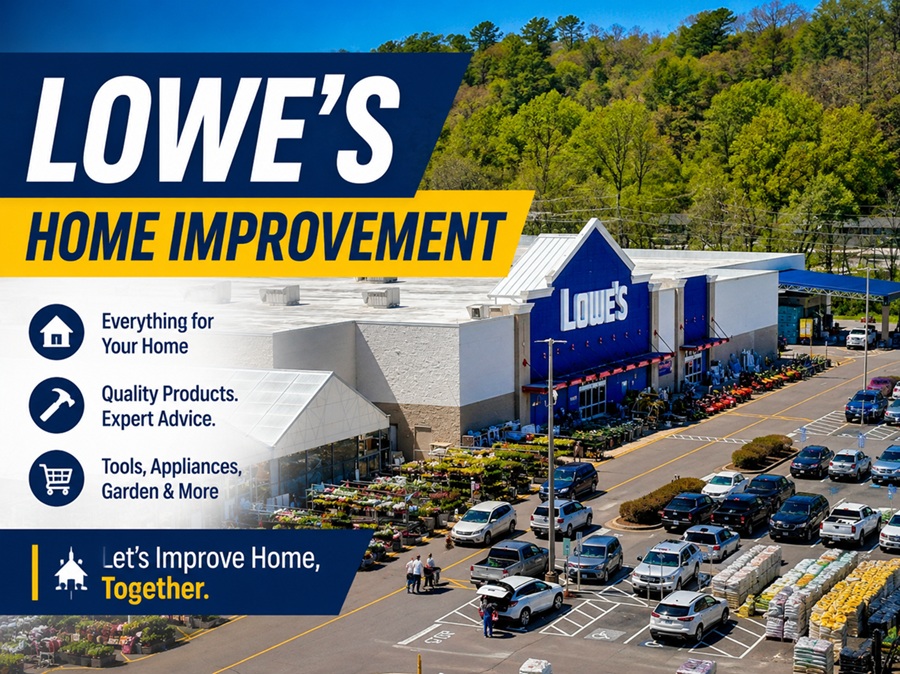
    Lowe’s is one of the two biggest home improvement retailers in the United States, operating roughly 1,700 large-format stores that sell nearly everything a person needs to build, fix, or decorate a home. If you have ever wondered what Lowe’s actually is, the plain answer is this: it is a one-stop shop for tools, lumber, appliances, paint, flooring, and garden supplies, backed by delivery and installation services for the jobs most people would rather not tackle alone.

    The company ranks second in the market, just behind The Home Depot, and it has spent decades serving two very different crowds at the same time. Weekend do-it-yourselfers wander the aisles looking for a new faucet, while contractors load flatbed carts with drywall and framing lumber. Whether the task is hanging a single shelf or gutting a kitchen, the store is designed to hand you the materials, the guidance, and sometimes the labor to see it through.

    Lowe’s Companies, Inc. at a Glance
    Company type Public (NYSE: LOW)
    Industry Retail, home improvement
    Founded 1921 in North Wilkesboro, North Carolina
    Founder Lucius Smith Lowe
    Headquarters Mooresville, North Carolina
    CEO Marvin Ellison (Chairman, President, and CEO)
    Number of stores About 1,700 across the United States
    Employees Around 270,000 to 300,000 associates
    Annual revenue Roughly $83.7 billion (fiscal 2024)
    Main rival The Home Depot
    Products Appliances, tools, lumber, paint, flooring, plumbing, hardware, garden, decor
    Website lowes.com

    A Quick Look at How Lowe’s Got Here

    The story starts more than a century ago with a small hardware store in North Carolina. Over time that single shop grew into a national chain, and today the business runs on a scale that would have been hard to imagine in 1921. The headquarters sits in Mooresville, and every store is company owned. Lowe’s does not franchise, which means the brand keeps tight control over how each location looks, stocks, and serves customers.

    For years Lowe’s held the top spot in the industry. That changed in 1989 when The Home Depot pulled ahead. Since then the two chains have traded punches across pricing, store layout, and online shopping, and the rivalry still shapes a lot of what both companies do.

    More recently the company leaned hard into technology. Under CEO Marvin Ellison, Lowe’s focused on what he calls retail fundamentals, meaning stocked shelves, clean stores, and a smoother website. The chain also rolled out a generative AI shopping assistant to help customers plan projects and locate items inside the store.

    What You Can Actually Buy at Lowe’s

    The product range is wide enough that most home projects can be sourced from a single visit. Instead of listing hundreds of items, here is how the store generally breaks down its departments:

    Department What you will find
    Appliances Refrigerators, ranges, washers, dryers, dishwashers, microwaves
    Building materials Lumber, drywall, insulation, concrete, roofing, siding
    Tools Power tools, hand tools, tool storage, and accessories
    Paint Interior and exterior paint, stains, primers, sprayers, supplies
    Flooring Hardwood, laminate, vinyl, tile, and carpet
    Kitchen and bath Cabinets, countertops, sinks, faucets, vanities, toilets
    Lawn and garden Plants, soil, mowers, grills, patio furniture, outdoor power gear
    Electrical and lighting Wiring, fixtures, ceiling fans, smart home devices

    The chain carries both national brand names and its own private labels. That mix lets shoppers choose between a recognized brand and a lower-priced store option that often does the same job.

    Services That Go Beyond the Shelves

    Lowe’s sells more than products. A large part of the business is helping people finish projects they cannot or would rather not handle themselves. Installation is arranged through independent contractors, so buying a dishwasher or new carpet can also include getting it fitted.

    • Installation for flooring, appliances, windows, doors, and more
    • Free or low-cost delivery on large items and bulk orders
    • Protection plans and repair services for appliances and tools
    • Tool and equipment rental at many locations
    • A dedicated pro desk and bulk pricing for contractors through LowesForPros.com

    These add-ons matter because they turn a hardware run into a full service. A homeowner replacing a water heater, for example, can buy the unit, schedule the install, and set up a warranty in one trip.

    Lowe’s vs The Home Depot: The Short Version

    People often ask which store is better, and the honest answer is that they are close competitors with slightly different personalities. Home Depot has long leaned toward the professional contractor and the serious builder. Lowe’s has traditionally aimed a bit more at the everyday homeowner, with store layouts and displays that feel a touch more retail than warehouse.

    Pricing tends to run neck and neck, and both chains price match under their own policies. The right choice usually comes down to which store is closer, which one stocks the specific brand you want, and where you feel more comfortable browsing.

    Factor Lowe’s The Home Depot
    Market rank (US) Second First
    Core shopper Homeowners and DIY Pros and heavy builders
    Store feel More retail styled More warehouse styled
    Pricing Very competitive Very competitive

    Store Brands Worth Knowing

    Part of shopping smart at Lowe’s is recognizing its private labels. These brands are made for the chain and usually cost less than the big national names while covering the same categories. You will spot them across tools, hardware, paint, and outdoor gear. When budget matters more than brand loyalty, they are often the practical pick.

    Ways to Save on Your Next Trip

    A few habits can shave real money off a project. None of them require a special membership, and most take only a minute to set up.

    • Watch for seasonal sales around holidays, when appliances and tools drop in price
    • Check the clearance sections at the ends of aisles for open-box and discontinued deals
    • Ask about the current military discount if you qualify
    • Compare the store brand against the national brand before you commit
    • Use price matching when you find the same item cheaper elsewhere

    Simple Tips Before You Shop

    A little planning goes a long way inside a store this size. Measure your space twice before buying flooring or cabinets, since returns on cut or special-order items can be a hassle. Take photos of the parts you are replacing so an associate can match them. And if a project feels beyond your skill level, ask about installation before you leave, rather than buying first and scrambling for help later.

    Technology Is Changing the In-Store Experience

    Lowe’s has spent heavily to modernize how people shop, and the effort shows on the floor. The company introduced a generative AI shopping assistant designed to help customers plan projects, answer product questions, and track down items inside a store. For a first-time renovator standing in an unfamiliar aisle, that kind of guidance takes some of the guesswork out of a project.

    Behind the scenes, the chain has leaned into supply chain automation and smarter inventory tracking. The practical result for shoppers is better stock accuracy, so the website is more likely to tell you the truth about whether an item is actually sitting on the shelf at your local store. That reliability is a small thing that saves a wasted trip.

    The broader push, which leadership calls the Total Home strategy, is about serving a customer through an entire project rather than a single purchase. Someone remodeling a bathroom is nudged toward the vanity, the flooring, the lighting, and the install, all under one roof.

    Shopping Online vs In the Store

    Both channels have their place, and the smart move is often a blend of the two. The website is ideal for research, price comparison, and checking availability before you drive over. Heavy or bulky items like appliances and lumber can be ordered online with delivery, which spares you the struggle of wrestling them into a car.

    The store still wins for anything you want to see, touch, or match in person. Paint colors, cabinet finishes, and flooring samples are hard to judge from a screen. Picking up online orders in store is also handy, since it locks in your item while skipping the shipping wait.

    A note on returns

    Return policies are generally friendly, but they are not unlimited. Standard purchases can usually be returned within a set window with a receipt, while special-order and cut items such as custom blinds or trimmed lumber are far harder to send back. Reading the policy before buying a made-to-order product saves headaches down the line.

    Frequently Asked Questions

    Is Lowe’s cheaper than Home Depot?

    Prices are usually very close, and neither store is reliably cheaper across the board. The better deal depends on the exact item, current promotions, and whether a store brand version exists.

    Does Lowe’s install what it sells?

    Yes, for many categories. Installation is handled through independent contractors, and it can be arranged for flooring, appliances, windows, doors, and similar products.

    Is Lowe’s a franchise?

    No. Every Lowe’s store is owned and operated by the company. There are no franchised or licensed locations.

    Where is Lowe’s headquartered?

    The corporate headquarters is in Mooresville, North Carolina.

    Who runs Lowe’s?

    Marvin Ellison serves as Chairman, President, and Chief Executive Officer.