
Tag: home upgrades

  • Why Home Improvement Is Important: The MintPalHouse Guide to Smarter Upgrades

    Why Home Improvement Is Important: The MintPalHouse Guide to Smarter Upgrades

    Home improvement is important because it protects and grows one of the biggest investments most people ever make, while making daily life safer, more comfortable, and more efficient. The reason the topic matters so much for MintPalHouse readers is simple: a home that is well maintained holds its value, avoids costly emergencies, and feels better to live in. Regular upgrades are not just about looks. They keep a property functional, healthy, and ready for whatever life brings next.

    If you take away one idea, let it be this. Small, steady improvements almost always cost less than the big repairs you get hit with by ignoring your home. A little attention now prevents a lot of pain later. Below, this MintPalHouse guide breaks down exactly why home improvement deserves a spot on your priority list, and where your time and money go furthest.

    Why Home Improvement Matters: Key Benefits
    Property value Well-kept homes hold value and appeal to buyers
    Safety Fixing hazards protects your family and prevents accidents
    Comfort Better layout and design improve everyday living
    Energy efficiency Upgrades lower utility bills and waste less
    Health Good air, light, and moisture control support wellbeing
    Cost control Small fixes prevent expensive emergency repairs
    Future-proofing Adapting the home fits changing family needs
    Mental wellbeing A clean, pleasant space reduces daily stress

    It Protects and Builds Property Value

    Start with the money, since that is what many people care about most. Buyers are drawn to homes that look modern, well maintained, and ready to move into. Even modest updates can lift a property’s appeal in a competitive market. Neglect does the opposite, chipping away at value year after year.

    Some projects consistently return more than others. You do not have to do all of them, but knowing which upgrades carry weight helps you spend wisely.

    High-value upgrade Why buyers care
    Kitchen refresh It is the room buyers judge first
    Updated bathroom Signals the home is well cared for
    Curb appeal and paint Creates a strong first impression
    Energy-efficient features Promises lower future bills
    Fresh flooring Makes the whole home feel newer

    It Keeps Your Home Safe

    This is the quieter reason home improvement matters, and arguably the most important. Homes age, and aging brings risk. Old wiring can spark fires. Leaky roofs invite water damage and mold. Worn flooring turns into a slip hazard, especially for young children and older adults.

    Bringing a home up to current standards removes these dangers before they become emergencies. Simple additions like slip-resistant bathroom flooring or motion-sensor lighting near entrances add real protection without a big budget. Safety upgrades rarely get attention on social media, but they are the ones that quietly keep people out of harm’s way.

    It Makes Everyday Life More Comfortable

    A home is where you sleep, work, relax, and build memories. When it functions well, you feel it in small ways every day. More storage cuts clutter. Better lighting lifts a room and your mood. A smarter layout removes the little friction points that wear on you over time.

    This is a core part of why home improvement is important for MintPalHouse readers. It is not about impressing anyone. It is about upgrading your own quality of life in the place you spend most of your hours.

    It Saves Money on Energy

    Efficiency upgrades pay you back month after month. Swapping old bulbs for LEDs, sealing drafts, adding insulation, and choosing efficient appliances all trim utility bills. Over a year those savings add up, and they cushion you against rising energy costs.

    There is an environmental angle too. Homes that use less power and water leave a smaller footprint, and eco-conscious features increasingly appeal to buyers who share those values. You can start small with LED bulbs, low-flow fixtures, and low-VOC paint, then expand from there.

    It Supports Health and Wellbeing

    The link between a home and health is stronger than many people realize. Poor ventilation traps stale air. Damp corners breed mold. Bad insulation makes rooms uncomfortable and drives up energy strain. Fixing these issues improves indoor air quality and makes the whole space healthier to live in.

    There is a mental side as well. A clean, organized, well-designed home creates a calmer environment. Clutter-free rooms are easier to move through, and a pleasant space genuinely lowers daily stress. Finishing a project, even a small one, brings a quiet sense of pride and ownership.

    It Prevents Expensive Repairs

    Here is a truth every homeowner learns eventually. Problems do not fix themselves, and they rarely get cheaper with time. A small roof leak becomes a ceiling replacement. A slow plumbing drip becomes water damage. Aging electrical becomes a serious hazard.

    Regular maintenance catches these issues early, when they are cheap and simple to handle. Spending a little on upkeep is almost always smarter than waiting for a crisis. That said, plan carefully, since poor planning can cause delays and extra costs of its own.

    It Future-Proofs Your Home

    Life changes, and a home should be able to change with it. Maybe you are welcoming a new family member, shifting to remote work, or caring for aging parents. Thoughtful improvements let a home adapt without the expense and upheaval of moving.

    This kind of flexible thinking is one of the strongest reasons why home improvement is important. It keeps your home working for you across different seasons of life, rather than forcing you to start over somewhere new.

    Getting Started the Smart Way

    You do not need to renovate everything at once. The MintPalHouse approach is steady, planned progress that fits your budget and your needs.

    • Fix safety and maintenance issues first, before cosmetic work
    • Set a clear budget and a simple plan before you start
    • Begin with high-impact, low-cost wins like paint and lighting
    • Choose upgrades that add real value, not just novelty
    • Keep records of what you improve for future reference and resale

    Smart Home Technology Adds Real Value

    Improvement is not only about paint and plumbing anymore. Smart home technology has made upgrades easier and more purposeful, and it appeals strongly to modern buyers. A smart thermostat learns your routine and trims energy use. Automated lighting and security systems add both convenience and peace of mind. Voice assistants handle small tasks from locking doors to setting reminders.

    The best part is that you can start small and grow over time. Many smart systems are modular, so a single smart plug or bulb today can expand into a fuller setup later. These features are not just gadgets. They boost comfort, cut waste, and increasingly show up on buyer wish lists, which ties directly into why home improvement is important for anyone thinking about resale.

    Do Not Forget the Outdoors

    Improvement stops too often at the front door, but outdoor spaces carry real weight. Gardens, patios, and balconies extend your living area and give the family calm spots to relax. They also shape the first impression a home makes, which matters enormously for value.

    You do not need a full landscape overhaul to see a difference. Tidy planting beds, a fresh coat on the front door, clean walkways, and simple outdoor lighting all lift curb appeal. A welcoming exterior tells visitors and buyers that the home is cared for before they ever step inside.

    Plan Before You Spend

    One caution runs through every smart improvement strategy: plan carefully. Poor planning leads to delays, complications, and extra costs that eat into your budget. Avoid pouring money into features that do not add real value or fit your life. A clear strategy before starting any project keeps the work on track and the spending under control.

    Think of home improvement as a long game rather than a one-time event. Steady, well-chosen upgrades strengthen your property as an investment, support a higher resale value, and keep the home durable for years. That long-term view is the heart of the MintPalHouse approach.

    Frequently Asked Questions

    Why is home improvement important?

    It protects property value, keeps a home safe and healthy, improves comfort and efficiency, and prevents small issues from turning into expensive repairs.

    Does home improvement really increase value?

    Yes. Well-chosen upgrades like kitchen refreshes, updated bathrooms, and better curb appeal make a home more attractive to buyers and help preserve long-term equity.

    What should I improve first?

    Start with anything affecting safety and maintenance, such as roofing, wiring, and plumbing. Then move to high-impact, low-cost updates like paint, lighting, and fixtures.

    Is home improvement worth it if I am not selling?

    Absolutely. Beyond resale, improvements make daily life more comfortable, cut energy bills, support health, and reduce stress in the space where you spend most of your time.

  • Bathroom Home Improvement: Ideas, Costs, and a Smart Plan for Your Remodel

    Bathroom Home Improvement: Ideas, Costs, and a Smart Plan for Your Remodel

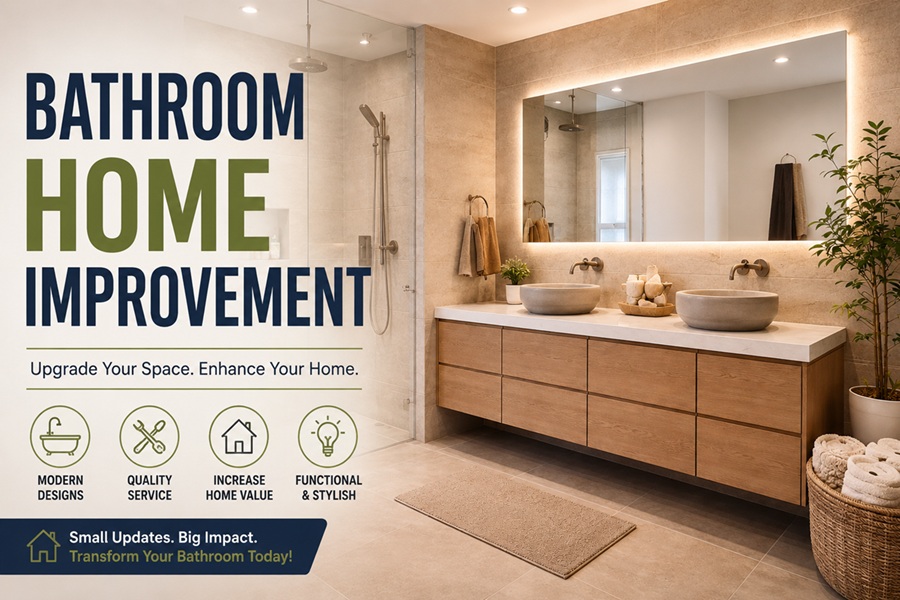
    Bathroom home improvement covers any project that updates, repairs, or upgrades a bathroom, from swapping a faucet for a few dollars to a full gut renovation that runs into the tens of thousands. The good news for most homeowners is that you do not need a huge budget to make a real difference. A fresh coat of paint, new fixtures, and better lighting can transform a tired space over a single weekend.

    If you are deciding where to start, focus first on anything that affects function and safety, such as leaks, poor ventilation, or worn flooring. Cosmetic touches like paint and hardware come next, and big-ticket work like moving plumbing or replacing a tub sits at the top of the cost ladder. This guide walks through the main options, rough costs, and a sensible order for planning the work.

    Bathroom Remodel: Quick Overview
    Project range Minor refresh to full gut renovation
    Typical minor refresh cost A few hundred to a couple thousand dollars
    Typical mid-range remodel cost Roughly $6,000 to $15,000
    Typical high-end remodel cost $20,000 and up
    Common timeline A weekend for small updates, 2 to 4 weeks for full remodels
    DIY friendly tasks Painting, hardware, fixtures, caulking, accessories
    Pro recommended tasks Plumbing relocation, electrical, tiling, tub or shower swaps
    Return on investment Often one of the stronger interior upgrades for resale

    Types of Bathroom Improvements

    Bathroom projects fall into a few broad buckets. Knowing which one you are taking on helps set the budget and decide whether you need a professional.

    Cosmetic refresh

    This is the lightest touch and the friendliest to a small budget. Think paint, a new mirror, updated cabinet handles, a modern faucet, and a fresh shower curtain or glass panel. Nothing structural changes, and most of it can be done without a contractor.

    Mid-range update

    Here you start replacing rather than just refreshing. New vanity, new toilet, updated flooring, and a re-tiled shower surround all fall in this range. Some tasks stay DIY, but tiling and plumbing often go smoother with a pro.

    Full renovation

    This is the big one. Layouts change, plumbing gets moved, and everything from the subfloor up may be replaced. A full renovation delivers the biggest visual payoff, but it also carries the highest cost, the longest timeline, and the most need for skilled trades.

    What a Bathroom Remodel Costs

    Prices swing widely based on the size of the room, the quality of materials, and where you live. Still, it helps to see the pieces broken out so you can spot where the money goes and where you can trim.

    Element Rough cost range Notes
    Paint and hardware $100 to $600 Highest impact for the lowest spend
    New faucet and fixtures $150 to $800 Easy DIY in most cases
    Vanity and sink $500 to $3,000 Cost rises fast with size and material
    Toilet replacement $200 to $900 Includes the unit and basic install
    Flooring $600 to $3,500 Vinyl is cheapest, tile costs more
    Shower or tub swap $1,500 to $8,000 Plumbing work drives the price
    Full tile work $1,000 to $5,000 Labor is the bulk of the cost

    Use these as ballpark figures, not quotes. Getting two or three estimates from local pros is the only way to know the real number for your space.

    Where a Small Budget Goes Furthest

    If you only have a few hundred dollars, spend it where the eye lands first. A clean, bright room reads as updated even without new tile or a new tub.

    • Repaint the walls in a moisture-friendly finish for an instant lift
    • Swap the faucet, showerhead, and cabinet pulls for a modern set
    • Replace the mirror and add layered lighting for a bigger, brighter feel
    • Re-caulk the tub and sink to kill that grimy, aging look
    • Add a new vanity light or upgrade to warmer LED bulbs

    DIY or Hire a Pro?

    The line between a satisfying weekend project and an expensive mistake usually runs through the plumbing and electrical. Cosmetic swaps are well within reach for most homeowners. Once water lines move or wiring changes, the stakes go up, and a licensed pro protects you from leaks, code violations, and water damage.

    Safe to DIY Better left to a pro
    Painting and caulking Moving plumbing lines
    Changing hardware Electrical rewiring
    Installing a faucet Full shower or tub installs
    Hanging a mirror or shelf Large-format tile and waterproofing

    Common Mistakes to Avoid

    A few missteps show up again and again in bathroom projects. Dodging them saves money and regret.

    • Skipping ventilation, which invites mold and peeling paint
    • Choosing style over grip, since slick tile gets dangerous when wet
    • Underestimating storage and ending up with clutter on every surface
    • Forgetting to seal grout, which stains and traps moisture over time
    • Starting demolition before materials arrive, which stretches the timeline

    A Simple Planning Order

    Working in the right sequence keeps a remodel from turning into chaos. Here is a straightforward order that most projects can follow.

    • Set a realistic budget and add a cushion of about 10 to 15 percent for surprises
    • Decide on the layout and whether plumbing needs to move
    • Pick materials and order them before any demolition begins
    • Handle behind-the-wall work first: plumbing, electrical, and waterproofing
    • Move on to surfaces: flooring, tile, and paint
    • Finish with fixtures, lighting, and accessories

    Ideas for a Small Bathroom

    Not every home has a spacious primary bath, and tight rooms bring their own challenges. The trick is to make the space feel bigger and work harder without knocking down walls. A few well-chosen moves can turn a cramped bathroom into one that feels calm and open.

    • Use light, cohesive colors to make walls recede and open up the room
    • Choose a wall-mounted or floating vanity to free up visible floor space
    • Swap a bulky vanity door for open shelving or slim drawers
    • Install a large mirror to bounce light and double the sense of space
    • Pick a corner sink or a compact toilet where every inch counts

    Storage is the real battle in a small bathroom. Vertical shelving above the toilet, recessed niches in the shower, and slim rolling carts squeeze in function without eating up the footprint.

    Choosing Materials That Last

    Bathrooms take a daily beating from moisture, heat, and constant use, so material choice is not just about looks. The wrong flooring warps, the wrong paint peels, and cheap fixtures corrode. Spending a little more on the right materials often costs less over the life of the room.

    Material choice Why it works in a bathroom
    Porcelain or ceramic tile Water resistant, durable, easy to clean
    Luxury vinyl plank Handles moisture well at a lower price
    Semi-gloss or satin paint Resists moisture better than flat finishes
    Quartz countertops Non-porous and low maintenance
    Solid brass or stainless fixtures Stand up to constant water exposure

    Do Not Skip Ventilation and Moisture Control

    This is the piece homeowners overlook most, and it quietly ruins good work. Without proper airflow, steam lingers, and that trapped moisture leads to mold, mildew, peeling paint, and warped surfaces. A quality exhaust fan is not a luxury, it is the thing protecting your whole remodel.

    Run the fan during and after every shower, seal grout and caulk lines to block water intrusion, and check for hidden leaks before you close up any walls. Getting moisture control right is what keeps a beautiful bathroom looking new instead of tired within a couple of years.

    Frequently Asked Questions

    How much does a bathroom remodel cost?

    A minor refresh can be a few hundred dollars, a mid-range remodel often lands between $6,000 and $15,000, and a high-end renovation can exceed $20,000. Local labor rates and material choices shift these numbers a lot.

    What adds the most value in a bathroom?

    Clean, functional updates tend to pay off best: a modern vanity, good lighting, fresh paint, and updated fixtures. Buyers respond to bathrooms that look bright, well kept, and move-in ready.

    Can I remodel a bathroom myself?

    You can handle cosmetic work such as paint, hardware, and simple fixtures. Plumbing relocation, electrical work, and full shower installs are safer with a licensed professional.

    How long does a bathroom remodel take?

    Small updates can be done in a weekend. A full remodel usually runs two to four weeks, depending on the scope and how quickly materials and trades line up.