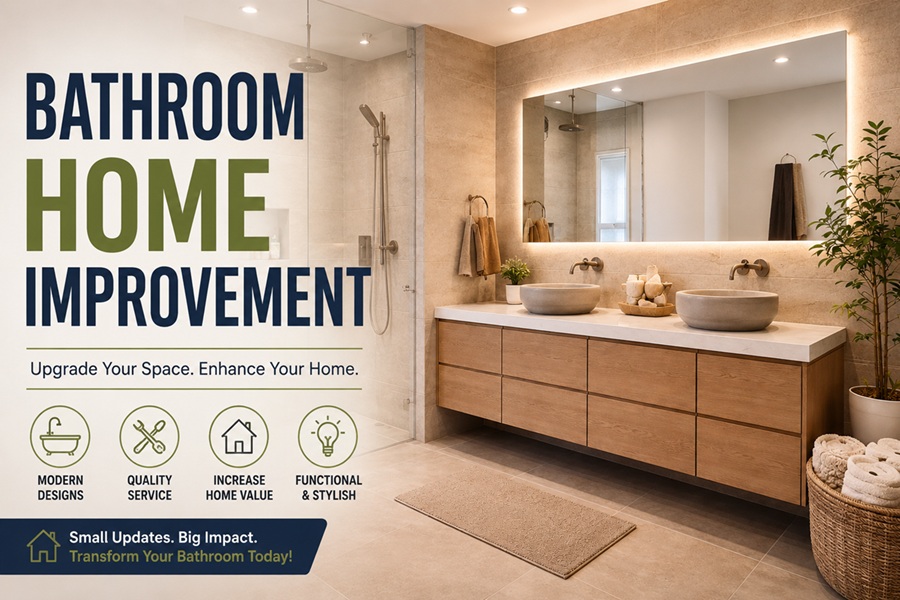
Bathroom home improvement covers any project that updates, repairs, or upgrades a bathroom, from swapping a faucet for a few dollars to a full gut renovation that runs into the tens of thousands. The good news for most homeowners is that you do not need a huge budget to make a real difference. A fresh coat of paint, new fixtures, and better lighting can transform a tired space over a single weekend.
If you are deciding where to start, focus first on anything that affects function and safety, such as leaks, poor ventilation, or worn flooring. Cosmetic touches like paint and hardware come next, and big-ticket work like moving plumbing or replacing a tub sits at the top of the cost ladder. This guide walks through the main options, rough costs, and a sensible order for planning the work.
| Bathroom Remodel: Quick Overview | |
| Project range | Minor refresh to full gut renovation |
| Typical minor refresh cost | A few hundred to a couple thousand dollars |
| Typical mid-range remodel cost | Roughly $6,000 to $15,000 |
| Typical high-end remodel cost | $20,000 and up |
| Common timeline | A weekend for small updates, 2 to 4 weeks for full remodels |
| DIY friendly tasks | Painting, hardware, fixtures, caulking, accessories |
| Pro recommended tasks | Plumbing relocation, electrical, tiling, tub or shower swaps |
| Return on investment | Often one of the stronger interior upgrades for resale |
Types of Bathroom Improvements
Bathroom projects fall into a few broad buckets. Knowing which one you are taking on helps set the budget and decide whether you need a professional.
Cosmetic refresh
This is the lightest touch and the friendliest to a small budget. Think paint, a new mirror, updated cabinet handles, a modern faucet, and a fresh shower curtain or glass panel. Nothing structural changes, and most of it can be done without a contractor.
Mid-range update
Here you start replacing rather than just refreshing. New vanity, new toilet, updated flooring, and a re-tiled shower surround all fall in this range. Some tasks stay DIY, but tiling and plumbing often go smoother with a pro.
Full renovation
This is the big one. Layouts change, plumbing gets moved, and everything from the subfloor up may be replaced. A full renovation delivers the biggest visual payoff, but it also carries the highest cost, the longest timeline, and the most need for skilled trades.
What a Bathroom Remodel Costs
Prices swing widely based on the size of the room, the quality of materials, and where you live. Still, it helps to see the pieces broken out so you can spot where the money goes and where you can trim.
| Element | Rough cost range | Notes |
| Paint and hardware | $100 to $600 | Highest impact for the lowest spend |
| New faucet and fixtures | $150 to $800 | Easy DIY in most cases |
| Vanity and sink | $500 to $3,000 | Cost rises fast with size and material |
| Toilet replacement | $200 to $900 | Includes the unit and basic install |
| Flooring | $600 to $3,500 | Vinyl is cheapest, tile costs more |
| Shower or tub swap | $1,500 to $8,000 | Plumbing work drives the price |
| Full tile work | $1,000 to $5,000 | Labor is the bulk of the cost |
Use these as ballpark figures, not quotes. Getting two or three estimates from local pros is the only way to know the real number for your space.
Where a Small Budget Goes Furthest
If you only have a few hundred dollars, spend it where the eye lands first. A clean, bright room reads as updated even without new tile or a new tub.
- Repaint the walls in a moisture-friendly finish for an instant lift
- Swap the faucet, showerhead, and cabinet pulls for a modern set
- Replace the mirror and add layered lighting for a bigger, brighter feel
- Re-caulk the tub and sink to kill that grimy, aging look
- Add a new vanity light or upgrade to warmer LED bulbs
DIY or Hire a Pro?
The line between a satisfying weekend project and an expensive mistake usually runs through the plumbing and electrical. Cosmetic swaps are well within reach for most homeowners. Once water lines move or wiring changes, the stakes go up, and a licensed pro protects you from leaks, code violations, and water damage.
| Safe to DIY | Better left to a pro |
| Painting and caulking | Moving plumbing lines |
| Changing hardware | Electrical rewiring |
| Installing a faucet | Full shower or tub installs |
| Hanging a mirror or shelf | Large-format tile and waterproofing |
Common Mistakes to Avoid
A few missteps show up again and again in bathroom projects. Dodging them saves money and regret.
- Skipping ventilation, which invites mold and peeling paint
- Choosing style over grip, since slick tile gets dangerous when wet
- Underestimating storage and ending up with clutter on every surface
- Forgetting to seal grout, which stains and traps moisture over time
- Starting demolition before materials arrive, which stretches the timeline
A Simple Planning Order
Working in the right sequence keeps a remodel from turning into chaos. Here is a straightforward order that most projects can follow.
- Set a realistic budget and add a cushion of about 10 to 15 percent for surprises
- Decide on the layout and whether plumbing needs to move
- Pick materials and order them before any demolition begins
- Handle behind-the-wall work first: plumbing, electrical, and waterproofing
- Move on to surfaces: flooring, tile, and paint
- Finish with fixtures, lighting, and accessories
Ideas for a Small Bathroom
Not every home has a spacious primary bath, and tight rooms bring their own challenges. The trick is to make the space feel bigger and work harder without knocking down walls. A few well-chosen moves can turn a cramped bathroom into one that feels calm and open.
- Use light, cohesive colors to make walls recede and open up the room
- Choose a wall-mounted or floating vanity to free up visible floor space
- Swap a bulky vanity door for open shelving or slim drawers
- Install a large mirror to bounce light and double the sense of space
- Pick a corner sink or a compact toilet where every inch counts
Storage is the real battle in a small bathroom. Vertical shelving above the toilet, recessed niches in the shower, and slim rolling carts squeeze in function without eating up the footprint.
Choosing Materials That Last
Bathrooms take a daily beating from moisture, heat, and constant use, so material choice is not just about looks. The wrong flooring warps, the wrong paint peels, and cheap fixtures corrode. Spending a little more on the right materials often costs less over the life of the room.
| Material choice | Why it works in a bathroom |
| Porcelain or ceramic tile | Water resistant, durable, easy to clean |
| Luxury vinyl plank | Handles moisture well at a lower price |
| Semi-gloss or satin paint | Resists moisture better than flat finishes |
| Quartz countertops | Non-porous and low maintenance |
| Solid brass or stainless fixtures | Stand up to constant water exposure |
Do Not Skip Ventilation and Moisture Control
This is the piece homeowners overlook most, and it quietly ruins good work. Without proper airflow, steam lingers, and that trapped moisture leads to mold, mildew, peeling paint, and warped surfaces. A quality exhaust fan is not a luxury, it is the thing protecting your whole remodel.
Run the fan during and after every shower, seal grout and caulk lines to block water intrusion, and check for hidden leaks before you close up any walls. Getting moisture control right is what keeps a beautiful bathroom looking new instead of tired within a couple of years.
Frequently Asked Questions
How much does a bathroom remodel cost?
A minor refresh can be a few hundred dollars, a mid-range remodel often lands between $6,000 and $15,000, and a high-end renovation can exceed $20,000. Local labor rates and material choices shift these numbers a lot.
What adds the most value in a bathroom?
Clean, functional updates tend to pay off best: a modern vanity, good lighting, fresh paint, and updated fixtures. Buyers respond to bathrooms that look bright, well kept, and move-in ready.
Can I remodel a bathroom myself?
You can handle cosmetic work such as paint, hardware, and simple fixtures. Plumbing relocation, electrical work, and full shower installs are safer with a licensed professional.
How long does a bathroom remodel take?
Small updates can be done in a weekend. A full remodel usually runs two to four weeks, depending on the scope and how quickly materials and trades line up.