

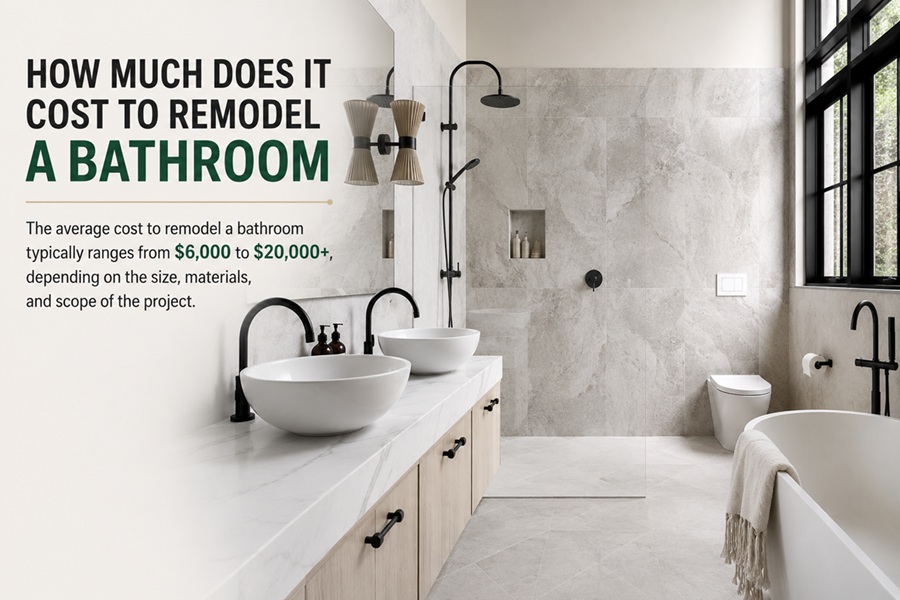
Most homeowners spend between roughly $6,500 and $15,000 on a mid-range bathroom remodel in 2026, with national averages landing somewhere around $12,000 to $16,500 depending on the source. A simple cosmetic refresh can be done for $1,500 to $5,000, while a full gut renovation typically starts around $15,000 and runs to $25,000 or more. High-end primary bathrooms can climb past $50,000.
The reason the range is so wide comes down to three things: the size of the room, how much you change, and the quality of materials you choose. Moving plumbing is expensive. Keeping the layout and simply replacing what is there is far cheaper. Below is a detailed breakdown of what drives the numbers, so you can build a budget that matches the project you actually want.
| Bathroom Remodel Cost: 2026 Snapshot | |
| Typical mid-range remodel | $6,500 to $15,000 |
| National average (varies by source) | Roughly $12,000 to $16,500 |
| Cosmetic refresh | $1,500 to $5,000 |
| Small bathroom average | Around $6,500 |
| Full gut renovation | $15,000 to $25,000+ |
| High-end primary bath | $25,000 to $60,000+ |
| Cost per square foot | Roughly $70 to $400, depending on scope |
| Labor share of budget | About 40 to 60 percent |
| 2026 price trend | Up roughly 4 to 6 percent from 2025 |
Why Prices Rose in 2026
If quotes feel higher than you expected, you are not imagining it. Bathroom remodel costs climbed roughly 4 to 6 percent over the previous year, driven mainly by skilled labor shortages and material cost increases.
That labor squeeze has a second effect worth planning around. Contractors juggling multiple jobs are stretching timelines by a week or two on average. Booking two or three months ahead often secures both better rates and a firmer schedule than trying to line up a crew last minute.
Cost by Project Scope
The single biggest factor is how far you go. These three tiers cover most real-world projects.
| Scope | Typical cost | What it includes |
| Cosmetic refresh | $1,500 to $5,000 | Paint, fixtures, mirror, hardware, lighting |
| Pull and replace | $7,500 to $15,000 | New vanity, tub or shower, tile, flooring, same layout |
| Full gut renovation | $15,000 to $25,000+ | Down to the studs, new plumbing, waterproofing, everything |
The jump between the second and third tier is where budgets get away from people. A pull-and-replace keeps existing plumbing where it is, which saves thousands. Once you move a toilet or relocate a shower, you add new rough-in work, inspections, and labor that quickly compound.
Cost by Bathroom Size
Bigger rooms cost more in total, but here is the counterintuitive part: small bathrooms cost more per square foot. Demolition, plumbing setup, and waterproofing are largely fixed costs regardless of room size, so they spread across fewer square feet.
| Bathroom type | Approximate size | Typical remodel cost |
| Powder room or half bath | About 20 to 35 sq ft | $3,500 to $8,000 |
| Small full bath | About 40 sq ft | $5,000 to $15,000 |
| Standard hall bath | About 60 sq ft | $13,000 to $25,000 |
| Primary or master bath | 100 sq ft and up | $20,000 to $50,000+ |
Where the Money Actually Goes
Understanding the line items helps you spot where to spend and where to save. Labor is consistently the largest single expense, often eating 40 to 60 percent of the total budget.
| Element | Typical cost range |
| Labor | 40 to 60 percent of total budget |
| Tile work (floor and shower) | $1,000 to $5,000 |
| Vanity and countertop | $500 to $3,500 |
| Shower or tub replacement | $1,500 to $8,000 |
| Flooring | $600 to $3,500 |
| Toilet | $200 to $900 |
| Fixtures and hardware | $150 to $1,200 |
| Demolition | $600 to $2,000 |
| Permits | Varies widely by locality |
Tile and the vanity are usually the biggest material line items. Plumbing costs escalate sharply the moment fixtures move from their original positions, which is why designers so often recommend keeping the existing layout if budget is tight.
What Drives Your Number Up or Down
Two identical bathrooms can cost wildly different amounts. These are the factors that decide which end of the range you land on.
- Layout changes: moving plumbing adds thousands before you pick a single tile
- Material tier: the same room can run $8,000 or $50,000 based on finish choices alone
- Location: the identical remodel can cost 40 to 60 percent more in a high-cost market
- Hidden problems: corroded pipes, bad ventilation, or water damage found during demo
- Custom work: bespoke tile patterns and built-ins carry a labor premium
How Long It Takes
Timeline tracks closely with scope, and knowing it upfront helps you plan around the disruption.
| Project type | Typical timeline |
| Cosmetic update | A few days to 2 weeks |
| Standard full remodel | 3 to 5 weeks |
| Gut renovation with layout changes | 6 to 10 weeks |
Permit approvals and custom material lead times can stretch any of these. Ordering materials before demolition begins is one of the simplest ways to avoid a stalled project.
Does a Bathroom Remodel Pay Off?
Bathrooms are one of the better interior investments, but the return depends heavily on how much you spend. The pattern is consistent: modest projects return a higher percentage than luxury ones.
Cosmetic refreshes tend to recoup the most proportionally, since the investment is small and the visual improvement is large. Mid-range remodels generally return a solid share of their cost. Very expensive gut renovations often return the lowest percentage, because they get customized to the current owner’s taste and can push a home’s value beyond what the neighborhood supports.
If you are remodeling specifically before a sale, the sweet spot for most homes falls in the mid range, focused on the features buyers universally want: a clean walk-in shower, a modern vanity, quality tile, and good lighting. Going far beyond your neighborhood’s typical price point rarely pays for itself.
Ways to Control the Cost
You have more leverage than you might think. These strategies cut real money without gutting the quality of the result.
- Keep the existing layout so plumbing stays where it is
- Refinish or reface rather than replace, where the item is still sound
- Choose mid-range materials that mimic premium looks at a fraction of the price
- Handle simple demolition or painting yourself if you are comfortable
- Order all materials before work begins to avoid delay charges
- Get three detailed quotes and compare line by line, not just totals
- Book a few months ahead rather than during peak demand
DIY Savings: What Is Realistic
Since labor is the largest expense, doing some work yourself is the most direct way to cut the bill. The trick is knowing which tasks genuinely save money and which create expensive problems.
Painting, demolition, removing old fixtures, and installing simple accessories are all reasonable for a capable homeowner and can shave a meaningful amount off a quote. Tiling, plumbing, electrical work, and shower waterproofing are different. A failed waterproofing job is invisible until water damage appears months later, and correcting it means tearing out finished work.
| Task | DIY savings potential | Risk if done wrong |
| Painting and prep | Good | Low |
| Demolition | Good | Moderate, watch for hidden pipes |
| Fixture swaps | Moderate | Low to moderate |
| Tiling | Moderate | High, visible flaws and water issues |
| Plumbing and electrical | Low | Very high, code and safety risks |
Budget for Surprises
Almost every bathroom project uncovers something unexpected once the walls open. Corroded pipes, inadequate ventilation, hidden water damage, and outdated electrical are all common discoveries, and each must be fixed before work continues.
Set aside a contingency of 10 to 20 percent on top of your quoted price. In older homes, lean toward the higher end. That cushion is the difference between an inconvenient surprise and a project that stalls halfway through.
Frequently Asked Questions
How much does a bathroom remodel cost in 2026?
Most homeowners spend $6,500 to $15,000 for a mid-range remodel, with national averages around $12,000 to $16,500. Cosmetic refreshes start near $1,500 and full gut renovations run $15,000 to $25,000 or more.
Why do small bathrooms cost so much per square foot?
Fixed costs like demolition, plumbing rough-in, and waterproofing stay roughly the same regardless of room size, so they spread across fewer square feet and push the per-foot rate higher.
What is the most expensive part of a bathroom remodel?
Labor, which typically accounts for 40 to 60 percent of the budget. Among materials, tile work and the vanity with countertop are usually the largest line items.
How can I save money on a bathroom remodel?
Keep the existing layout so plumbing does not move, choose mid-range materials, refinish rather than replace where possible, and order all materials before demolition starts.
Do bathroom remodels increase home value?
Generally yes, though modest projects return a higher percentage than luxury ones. Cosmetic and mid-range updates tend to recoup the most, while very expensive custom renovations often return less proportionally.
Note: All figures are national averages and ranges gathered from industry cost data. Actual pricing varies significantly by region, contractor, and project specifics. Always obtain multiple local quotes for your own project.