

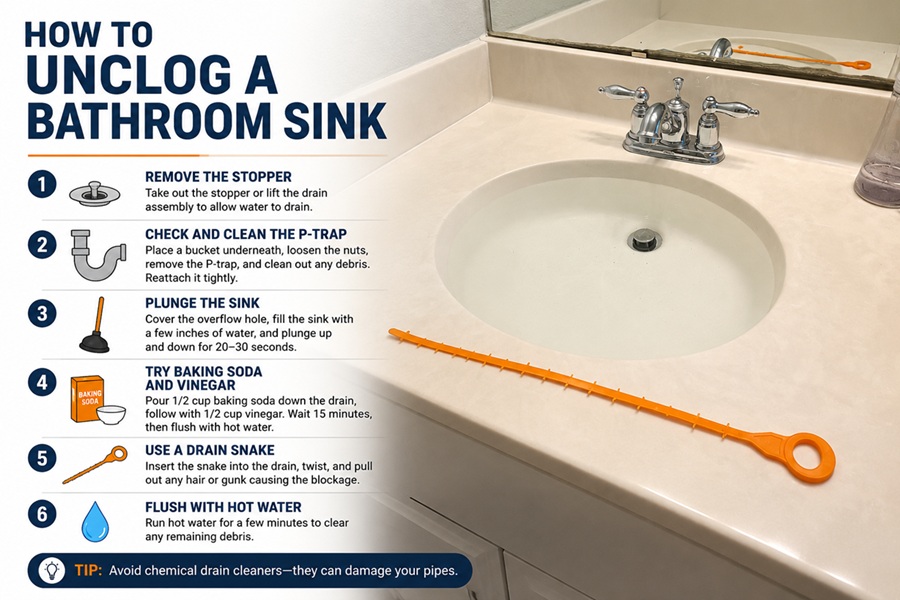
The fastest way to unclog a bathroom sink is to pull out the drain stopper and remove the hair and gunk wrapped around it, because that is the cause roughly nine times out of ten. If that does not clear it, follow up with hot water, a baking soda and vinegar treatment, a plunger, a drain snake, or by cleaning out the P-trap under the sink. Most clogs give way within twenty minutes using nothing more than basic household tools.
Bathroom sinks clog differently than kitchen sinks. Instead of grease and food, the culprit is almost always a tangled mat of hair bound together with soap scum, toothpaste, and skin oils. That mass builds up right below the drain opening, which is good news, because it means you can usually reach it without dismantling anything. Here are the six methods to try, in the order that makes the most sense.
| Unclogging a Bathroom Sink: Quick Facts | |
| Most common cause | Hair bound with soap scum and toothpaste |
| Where the clog sits | Usually just below the drain stopper |
| Easiest first step | Remove and clean the drain stopper |
| Time needed | Often under 20 minutes |
| Tools that help | Plastic zip tool, plunger, drain snake, bucket |
| Best avoided | Chemical drain cleaners, which can damage pipes |
| Call a plumber if | Multiple drains back up or the clog keeps returning |
| Skill level | Beginner friendly |
Before You Start
A couple of quick precautions save trouble later. Place a bucket and old towels under the sink if you plan to open the P-trap, and clear everything out of the cabinet below.
One important safety note: if you have already poured a chemical drain cleaner down the sink, do not plunge or open the trap. Those chemicals can splash back and burn your skin and eyes. Let the drain sit, flush it thoroughly with water, and consider calling a plumber instead. Mixing different drain products is also dangerous, since some combinations release harmful fumes.
Method 1: Clean the Drain Stopper
Start here, because this solves the majority of bathroom sink clogs. The pop-up stopper sits directly in the path of every strand of hair that goes down the drain, and over months it collects a surprisingly large mass.
Some stoppers lift straight out with a twist. Others are held by a small pivot rod behind the drain pipe under the sink. If yours will not budge, reach under the basin, unscrew the nut holding the pivot rod, pull the rod out, and the stopper will lift free.
Once it is out, expect something unpleasant. Pull the buildup off with a paper towel, wash the stopper in hot soapy water, and look down into the drain opening with a flashlight. If you see more hair just below, grab it with needle-nose pliers or a bent wire. Reassemble, run the tap, and there is a good chance you are done.
Method 2: Flush With Hot Water
For a sink that is draining slowly rather than fully blocked, hot water alone can break down the soap and toothpaste residue holding the clog together.
Run the hot tap at full pressure for a few minutes. For a stronger effect, pour a kettle of very hot water slowly down the drain in stages. One caution: if you have PVC pipes, use hot rather than fully boiling water, since boiling water can soften plastic joints and seals over time. Metal pipes handle boiling water fine.
Method 3: Baking Soda and Vinegar
This classic combination is gentle on pipes and works well on the greasy, soapy film that narrows a drain. It is not powerful enough for a solid hair blockage, but it is excellent as a follow-up or for maintenance.
- Remove standing water from the basin so the mixture can reach the clog
- Pour about half a cup of baking soda directly into the drain
- Follow with roughly a cup of white vinegar
- Cover the drain with a stopper or rag to push the reaction downward
- Wait fifteen to thirty minutes, then flush with hot water
You will hear fizzing as the two react. That bubbling action helps lift loosened debris off the pipe walls. Repeat once if the drain improves but has not fully cleared.
Method 4: Use a Plunger
A small sink plunger creates suction that can dislodge a clog sitting a little further down the pipe. The trick most people miss is blocking the overflow hole, that small opening near the top of the basin. If you leave it open, the pressure escapes and the plunger does almost nothing.
- Stuff a wet rag firmly into the overflow opening
- Add enough water to the basin to cover the plunger cup
- Seal the plunger over the drain and push down, then pull up sharply
- Repeat that motion ten to fifteen times in a steady rhythm
- Lift the plunger and check whether the water drains away
Method 5: Try a Drain Snake or Zip Tool
When hair sits deeper than you can reach by hand, a tool designed for the job makes short work of it. You have two good options, and both are inexpensive.
| Tool | How it works | Best for |
| Plastic zip tool | Barbed strip that snags and pulls hair out | Hair clogs near the drain |
| Hand auger or snake | Flexible cable that pushes through blockages | Clogs deeper in the pipe |
| Bent wire hanger | Improvised hook for shallow clogs | A quick fix with no tools on hand |
Feed the tool slowly into the drain until you meet resistance. Twist gently as you push, then draw it back out. You are trying to hook and extract the clog rather than shove it deeper. Repeat a few times, flushing with hot water between attempts, until the drain runs freely.
Method 6: Clean Out the P-Trap
If nothing above has worked, the clog is likely sitting in the curved section of pipe beneath the sink. Cleaning the P-trap is more hands-on but still well within beginner territory.
- Place a bucket directly beneath the trap to catch water and debris
- Loosen the slip nuts at each end of the curved section, by hand if possible
- Remove the trap carefully, expecting water to spill out
- Clear the buildup inside and scrub it clean with a brush and hot soapy water
- Check the pipes on either side for debris while the trap is off
- Reattach the trap, tighten the nuts snugly, and run water to check for drips
If you spot any leaking at the joints afterward, tighten slightly more or replace the washers, which cost very little at any hardware store.
Why to Skip Chemical Drain Cleaners
Store-bought chemical cleaners are tempting, but they carry real downsides. They can corrode older metal pipes and damage plastic ones over repeated use. They often fail on solid hair clogs, leaving caustic liquid sitting in your sink.
They also create a hazard for whoever works on the drain next, including you. If a plumber later opens that trap, the chemicals are still in there. Mechanical removal with a zip tool or snake is safer, cheaper, and more effective for the kind of clog bathroom sinks actually get.
Keeping the Drain Clear
A few small habits prevent most future clogs and take almost no effort.
- Fit a mesh drain screen to catch hair before it enters the pipe
- Clean the stopper every month or two rather than waiting for trouble
- Flush the drain with hot water weekly to keep soap film from building
- Wipe excess hair from razors and brushes into the bin, not the sink
- Run a baking soda and vinegar treatment every couple of months as maintenance
When to Call a Plumber
Most bathroom sink clogs are a do-it-yourself job, but a few signs point to something bigger that needs professional attention.
- Several drains in the house are slow or backing up at once
- Water backs up into other fixtures when you run the sink
- The clog returns quickly no matter how thoroughly you clear it
- You notice sewage odors along with the drainage problem
- There is visible leaking or damage to the pipes under the sink
These symptoms can indicate a blockage in the main line or a venting problem, neither of which is fixed from the sink basin.
Frequently Asked Questions
What causes most bathroom sink clogs?
Hair is the main culprit, usually bound together with soap scum, toothpaste, and skin oils. The mass typically forms right below the drain stopper.
Does baking soda and vinegar really unclog a drain?
It works well on soap and grease buildup and is a good maintenance treatment, but it usually will not dissolve a solid hair clog on its own. Pair it with physical removal for best results.
Should I use a chemical drain cleaner?
Most plumbers advise against it. Chemical cleaners can damage pipes, often fail on hair clogs, and create a hazard for anyone who opens the drain afterward. Mechanical tools work better.
Why does my sink clog again so quickly?
Either the original clog was only partly cleared, or hair is still entering the drain freely. A mesh screen and regular stopper cleaning usually solve recurring problems.
Can I pour boiling water down my sink?
Use hot rather than fully boiling water if you have PVC pipes, since very high heat can soften plastic joints over time. Metal pipes tolerate boiling water without issue.