

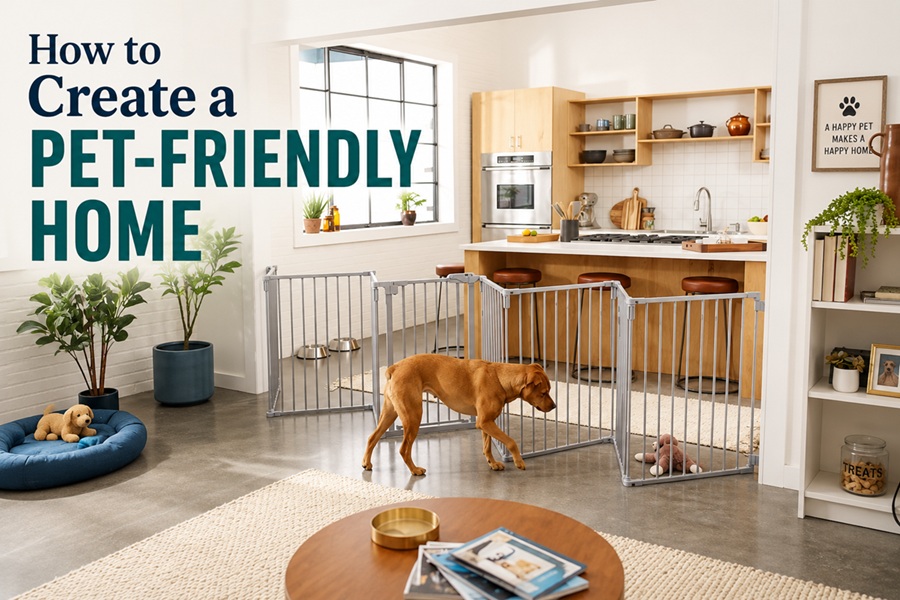
Creating a pet-friendly home means designing a space that keeps your animals safe and comfortable while staying durable and easy to clean for you. The fastest way to get there is to choose scratch- and stain-resistant materials, remove common household hazards, give each pet a space of their own, and build simple cleaning habits into your routine. Do those four things and you will have a home that works beautifully for both people and pets.
A pet-friendly home is not about sacrificing style. With the right materials and a little planning, you can have a space that looks great and stands up to muddy paws, shedding, and the occasional accident. This guide walks through the key choices room by room, plus the safety steps that matter most, so your home stays welcoming for every member of the family, furry ones included.
| Pet-Friendly Home Essentials | |
| Main goals | Pet safety, comfort, durability, easy cleaning |
| Best flooring | Tile, luxury vinyl, or laminate, not soft hardwood |
| Best fabrics | Leather, microfiber, or tight-weave performance fabric |
| Avoid | Toxic plants, loose cords, delicate rugs, breakables low down |
| Give each pet | A dedicated bed, feeding spot, and quiet retreat |
| Cleaning must-haves | Washable covers, a good vacuum, enzyme cleaner |
| Outdoor safety | Secure fencing and pet-safe garden plants |
| Key habit | Regular grooming to cut shedding and mess |
Start With Pet-Proof Flooring
Flooring takes the most abuse in a pet home, so it is the smartest place to start. Claws scratch, accidents happen, and spills are inevitable. The goal is a surface that shrugs all of that off.
Hard, water-resistant floors win here. Tile is nearly indestructible and simple to wipe clean. Luxury vinyl plank resists scratches and moisture while looking like wood. Laminate is another solid, budget-friendly option. Softer choices like traditional hardwood scratch easily, and wall-to-wall carpet traps hair, odor, and stains, so many pet owners avoid it or limit it to certain rooms.
| Flooring type | Pet rating | Why |
| Tile | Excellent | Scratch-proof, waterproof, easy to clean |
| Luxury vinyl plank | Excellent | Scratch and water resistant, comfortable |
| Laminate | Good | Durable and affordable, less water resistant |
| Hardwood | Fair | Looks great but scratches and stains |
| Carpet | Poor | Traps hair, odor, and stains |
Choose Fabrics and Furniture That Last
Furniture is the next battleground. Delicate fabrics and pets rarely mix, so lean toward materials built to handle claws and fur. Leather is easy to wipe and resists odor, though it can show deep scratches. Microfiber and tight-weave performance fabrics are excellent, since they repel stains and release hair easily.
Skip loose-weave textiles like linen and velvet in high-use areas, as claws snag them and hair clings. Removable, washable cushion covers are a lifesaver. When it comes to color, choosing tones close to your pet’s fur hides shedding between cleanings. A few practical picks go a long way here.
- Leather or faux leather for easy-wipe durability
- Microfiber and performance fabrics for stain resistance
- Washable slipcovers you can toss in the laundry
- Fabric colors that blend with your pet’s coat
- Low-pile, washable rugs instead of delicate ones
Remove Hazards to Keep Pets Safe
Safety is the part you cannot skip. Homes are full of everyday items that are harmless to us but dangerous to animals. A careful sweep of each room prevents accidents and emergency vet visits.
- Toxic plants: lilies, pothos, aloe, and many others can poison pets; choose pet-safe greenery instead
- Loose cords: tuck away or cover electrical cords that curious pets may chew
- Small objects: keep chokeable items, medications, and cleaning supplies out of reach
- Unsecured trash: use covered or latched bins so pets cannot get into harmful scraps
- Fragile decor: move breakables off low shelves and tables where tails and paws reach
Store human foods that are toxic to animals, such as chocolate, grapes, and onions, well out of reach. In the kitchen and bathroom, keep cabinets with chemicals securely closed, using child locks if needed.
Give Every Pet Their Own Space
Pets feel calmer when they have a spot to call their own. Setting up dedicated areas reduces stress and helps keep the rest of your home tidy. It does not take much room.
Create a comfortable bed in a quiet corner where your pet can retreat and rest. Set up a consistent feeding station with easy-to-clean mats under the bowls. If you have a cat, place litter boxes in private, low-traffic spots. Adding scratching posts and toys also protects your furniture by giving pets an approved outlet for their instincts.
Make Cleaning Easy on Yourself
A pet-friendly home is a clean home, and the secret is making upkeep simple. When cleaning is easy, you actually do it, and mess never gets ahead of you.
- Keep a quality vacuum handy for hair on floors and furniture
- Use enzyme-based cleaners to fully remove odors from accidents
- Place washable mats near doors and feeding areas
- Groom pets regularly to cut down on shedding at the source
- Wipe muddy paws at the door with a towel kept nearby
Pet-Friendly Walls and Paint
Walls take more abuse than people expect in a pet home, from muddy splashes to the occasional bump and scratch. The fix is choosing finishes that wipe clean. Satin, semi-gloss, and eggshell paints are far easier to scrub than flat finishes, which tend to hold marks.
Scrubbable or washable paint lines are worth the small extra cost, since you can wipe away dirt and paw prints without rubbing off color. In high-traffic areas, consider adding easy-clean wainscoting or a durable lower wall treatment to take the brunt of the mess.
Designing for Different Pets
Not every pet has the same needs, so tailor your setup to the animals you actually have. A little customization keeps everyone comfortable.
For dogs
Dogs bring mud, energy, and shedding. Prioritize a mudroom or entry setup with washable mats and a spot to wipe paws. Durable floors and stain-resistant furniture matter most, and a designated feeding and rest area keeps their gear contained.
For cats
Cats need vertical space and privacy. Add shelves, cat trees, or perches so they can climb and observe. Place litter boxes in quiet, accessible spots, and provide scratching posts near the furniture they might otherwise target. Cats also appreciate a calm hideaway to retreat to.
Do Not Forget the Outdoors
If your pet spends time outside, extend the same care to your yard. Secure fencing keeps dogs safely contained and blocks escape routes. Check that garden plants are non-toxic, since some common flowers and shrubs are dangerous if chewed.
Provide shade and fresh water for hot days, and store lawn chemicals, fertilizers, and tools where pets cannot reach them. A shaded resting spot and a safe, enclosed area let pets enjoy the outdoors without risk.
Pet-Proofing on a Budget
Making a home pet-friendly does not require a full renovation. Plenty of low-cost changes deliver real results, so you can start today without a big spend.
- Add washable slipcovers to protect furniture you already own
- Use inexpensive area rugs over hard floors for traction and comfort
- Buy cord covers or clips to hide tempting wires
- Place mats under food bowls and at entry doors to catch mess
- Swap toxic houseplants for affordable pet-safe varieties
These small steps add up quickly. As your budget allows, you can move on to bigger upgrades like new flooring, but the basics above handle most everyday safety and cleanliness needs right away.
Frequently Asked Questions
What is the best flooring for pets?
Tile and luxury vinyl plank are top choices because they resist scratches and water and clean easily. Laminate is a good budget option, while carpet and soft hardwood are harder to maintain.
What furniture fabrics hold up best with pets?
Leather, microfiber, and tight-weave performance fabrics resist stains, odor, and clinging hair. Washable slipcovers add another layer of protection and make cleanup simple.
How do I make my home safe for a new pet?
Remove toxic plants, secure loose cords, store chemicals and medications out of reach, cover trash bins, and move fragile or small objects away from low, reachable areas.
How do I control pet hair and odor?
Groom pets regularly, vacuum often, use enzyme cleaners for accidents, choose washable covers and mats, and pick fabric colors that blend with your pet’s coat.
Can a pet-friendly home still look stylish?
Absolutely. Durable materials now come in attractive finishes, so you can have scratch-resistant floors, wipeable furniture, and a polished look at the same time.