

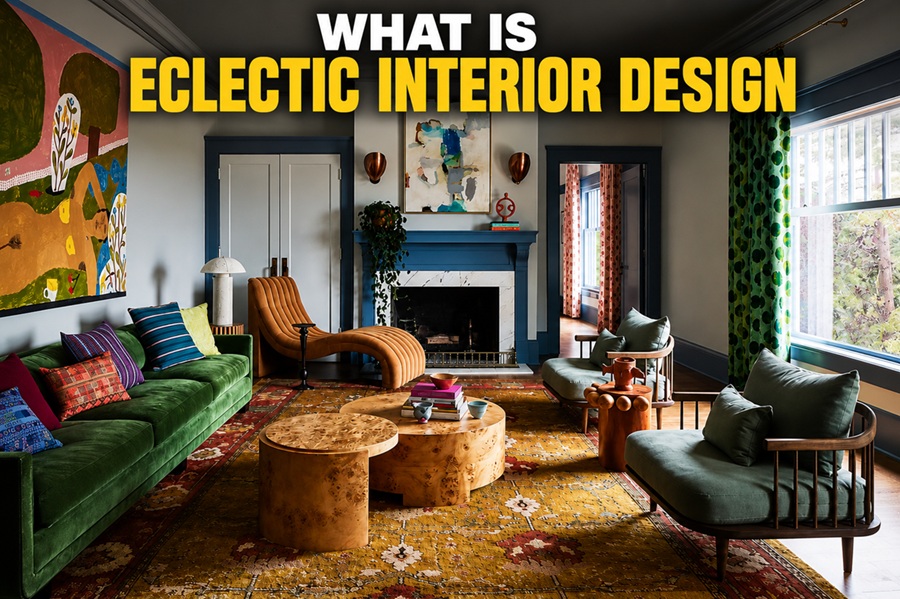
Eclectic interior design is a style that combines elements from different periods, cultures, and design movements into one cohesive space. Rather than following a single look, it thoughtfully mixes colors, patterns, textures, and eras to create a room that feels personal, layered, and full of character. The key word is thoughtfully. Eclectic design is not random clutter, it is a deliberate blend held together by a common thread such as color, scale, or repetition.
If you have ever felt boxed in by one design style, eclectic decorating is the freedom you have been looking for. It lets you pair a vintage armchair with a modern lamp, hang bold art above a rustic table, and layer patterns most rules would forbid. Done well, the result is a home that tells your story and looks like no one else’s. This guide explains how the style works and how to pull it off without it feeling chaotic.
| Eclectic Design at a Glance | |
| What it is | A mix of styles, eras, and cultures in one space |
| Core idea | Deliberate variety unified by a common thread |
| Color palette | Flexible, often bold, tied together by repetition |
| Patterns | Mixed freely, balanced by scale and repetition |
| Furniture | Pieces from different periods and styles combined |
| Unifying tools | Color, texture, repetition, and balance |
| Best for | People who want a personal, expressive, one-of-a-kind home |
| Biggest risk | Tipping from curated into cluttered |
Eclectic Is Not the Same as Random
This is the most important thing to understand. People often assume eclectic means throwing together whatever you like, but that usually ends in a messy, disjointed room. True eclectic design is curated. Every piece may come from a different world, yet they are chosen and arranged to work together.
The difference between eclectic and chaotic comes down to intention. A skilled eclectic room has an invisible logic running through it, whether that is a repeated color, a consistent tone, or a balance of visual weight. Learn to spot that logic and the style stops feeling intimidating.
The Key Characteristics
A few traits define eclectic interiors. They are what give the style its energy and personality.
A mix of eras and styles
Eclectic rooms freely combine old and new. A mid-century chair might sit beside an antique cabinet and a contemporary sofa. This blending of periods creates depth and a collected-over-time feeling that no single-style room can match.
Bold use of color and pattern
Color and pattern are central to the look. Eclectic design embraces contrast, layering different prints and hues with confidence. The trick is balance: mixing pattern scales, from large to small, and repeating a color across the room to tie it all together.
Layered textures
Texture adds richness and helps varied pieces feel connected. Velvet, rattan, metal, wood, and woven textiles often share the same space, giving the room a tactile, dimensional quality.
Personal and collected
Above all, eclectic interiors feel personal. They often feature travel finds, inherited pieces, art, and objects with meaning. This is what makes the style so expressive, since it puts your history and taste on display.
How to Make Eclectic Design Work
The secret to eclectic success is unity within variety. These techniques keep a mixed room feeling intentional rather than accidental.
| Technique | How it helps |
| Choose a unifying color | Repeating one shade ties different pieces together |
| Balance visual weight | Spread bold items evenly so no corner overwhelms |
| Mix pattern scales | Pair large prints with small ones to avoid clashing |
| Repeat elements | Echoing a material or tone creates rhythm |
| Leave breathing room | Negative space keeps variety from feeling crowded |
A Simple Starting Approach
If a blank slate feels overwhelming, build the room in layers instead of all at once. This keeps things controlled and lets the style grow naturally.
- Start with a neutral base on walls and large furniture to anchor the room
- Pick one unifying color to repeat across different pieces
- Add character with a few statement items from different eras
- Layer in patterns gradually, balancing bold with subtle
- Finish with personal objects, art, and textures that mean something to you
Common Mistakes to Avoid
Because the style thrives on freedom, it is easy to overdo. Steer clear of these pitfalls to keep your room curated.
- Adding too many pieces until the room feels cluttered
- Skipping a unifying thread, which leaves the space disjointed
- Ignoring scale, so pieces fight for attention
- Filling every surface and leaving no negative space
- Mixing without balance, letting one bold item dominate everything
Eclectic Design Room by Room
Because the style is so flexible, it looks different in every room while keeping the same spirit. Here is how to bring it to life in the main living spaces.
Living room
The living room is the perfect canvas for eclectic style. Combine a modern sofa with a vintage rug, a gallery wall of mixed art, and accent chairs from different eras. Repeat one or two colors through the pillows and decor to hold the mix together, and the room reads as collected rather than chaotic.
Bedroom
An eclectic bedroom feels personal and layered. Pair an antique headboard with contemporary lamps, or mix patterned bedding with a bold piece of art. Keep the palette anchored by one repeated shade so the variety feels calm enough for rest.
Dining space
Mismatched chairs around a single table are a signature eclectic move. Choose chairs that differ in style but share a color, material, or height, and they will feel intentional. Add a statement light fixture and the whole space gains personality.
Where Eclectic Design Fits Best
One of the greatest strengths of eclectic style is how well it suits real life. It is ideal for people who travel and collect, for renters piecing together furniture over time, and for anyone who inherits or thrifts pieces they love. Instead of forcing everything to match, the style celebrates the story behind each item.
It also grows with you. As you find new pieces, they can join the mix rather than clash with a rigid theme. That flexibility makes eclectic design one of the most forgiving and rewarding approaches for a home meant to evolve over the years.
Why People Love Eclectic Design
The appeal of eclectic style is personality. It rejects the cookie-cutter look and celebrates individuality, letting your home reflect who you are rather than a catalog. It is also practical, since it welcomes pieces you already own, including hand-me-downs and finds that would not fit a stricter style.
There is a budget benefit too. You do not need a matching furniture set or everything from one store. Eclectic design lets you shop over time, mix high and low, and build a space that grows with you. For creative people who value character over conformity, few styles are as rewarding.
A Quick Word on Its Roots
Eclectic design is not a modern invention. The word itself comes from a Greek term meaning to select, and the style has long described the practice of choosing the best elements from many sources. Over the decades it has evolved from a designer’s technique into a beloved approach for everyday homes.
What keeps it fresh is that it never belongs to a single era. Because eclectic style is defined by the act of mixing rather than by any fixed set of pieces, it naturally absorbs new trends and old treasures alike. That adaptability is why it has stayed relevant while stricter styles come and go.
Frequently Asked Questions
What is eclectic interior design in simple terms?
It is a style that mixes furniture, colors, patterns, and decor from different eras and cultures into one cohesive, personal space, unified by a common thread like color or texture.
Is eclectic design just random decorating?
No. Eclectic design is deliberate and curated. The mix is held together by intentional choices such as a repeated color, balanced scale, or consistent texture, which keeps it from feeling chaotic.
How do I keep an eclectic room from looking cluttered?
Use a unifying color, balance visual weight across the room, mix pattern scales, repeat elements, and leave enough negative space so pieces have room to breathe.
Is eclectic style good on a budget?
Yes. It welcomes mixing old and new, high and low, and pieces you already own, so you can build the look gradually without buying matching sets.
What kinds of homes suit eclectic design?
Almost any. Because it is so flexible, eclectic style works in apartments, houses, and everything between, adapting to whatever pieces and character you bring to it.