

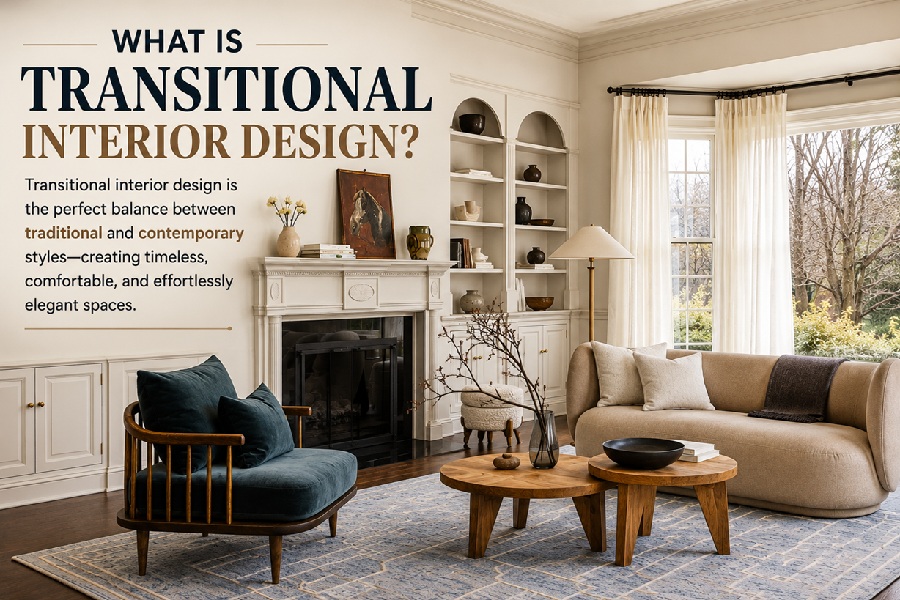
Transitional interior design is a style that blends traditional and modern elements into one balanced, comfortable look. It marries the warmth and classic detail of traditional design with the clean lines and simplicity of contemporary style, creating a space that feels current but never cold. In short, it is the middle ground between old and new, and that balance is exactly why it has become one of the most popular design choices for homes today.
If you love classic furniture but find full traditional rooms too formal, and you admire modern spaces but find them too stark, transitional design is likely your answer. It keeps the best of both worlds: the coziness of timeless pieces and the airy calm of a pared-back palette. The result is a home that looks pulled together, feels livable, and does not go out of fashion every few years.
| Transitional Design at a Glance | |
| What it is | A blend of traditional and modern styles |
| Core idea | Balance between classic warmth and clean simplicity |
| Color palette | Neutrals: beige, gray, taupe, cream, white |
| Furniture | Comfortable, with a mix of curved and straight lines |
| Textures | Layered fabrics like linen, cotton, wool, and leather |
| Decor approach | Minimal and intentional, not cluttered |
| Best for | People who want timeless, comfortable, low-fuss interiors |
| Overall feel | Calm, sophisticated, and welcoming |
Where the Style Comes From
Transitional design grew out of a simple desire: to soften the formality of traditional interiors without losing their comfort. Designers began pairing classic silhouettes with modern finishes, and the hybrid stuck. It is less a strict rulebook and more a philosophy of balance.
Because it borrows from two established styles, transitional interiors rarely feel trendy or dated. That timeless quality is a big part of the appeal for homeowners who do not want to redecorate every time fashions shift.
The Key Characteristics
A few consistent traits define the look. Once you know them, transitional rooms become easy to spot and easy to create.
A neutral color palette
Color is where transitional design starts. Rooms lean on soft, neutral tones such as beige, gray, taupe, cream, and white. These shades create a calm, cohesive backdrop and let texture and form do the talking. Bold color is used sparingly, if at all, usually as a quiet accent rather than a statement.
A mix of furniture styles
This is the heart of the style. A transitional room might pair a classic rolled-arm sofa with a sleek glass coffee table, or set traditional wingback chairs beside a modern console. The trick is balance, combining curved, ornate pieces with straight, simple ones so neither side dominates.
Comfort above all
Transitional interiors are made to be lived in. Furniture is chosen for comfort as much as looks, with plush seating and generous proportions. Nothing feels too precious to use, which sets the style apart from stricter traditional rooms.
Layered texture
With color kept quiet, texture brings the depth. Think linen curtains, a chunky wool throw, a leather armchair, and a woven rug in the same room. These layers add richness and warmth without adding visual clutter.
Transitional vs Traditional vs Modern
It helps to see how transitional sits between its two parent styles. This quick comparison makes the differences clear.
| Feature | Traditional | Transitional | Modern |
| Lines | Ornate, curved | Mix of both | Clean, straight |
| Color | Rich, warm | Soft neutrals | Stark, minimal |
| Feel | Formal | Balanced, cozy | Sleek, cool |
| Decor | Layered, detailed | Simple, curated | Very minimal |
How to Create a Transitional Look
You do not need to start from scratch to bring this style home. A few deliberate choices will move almost any room in the transitional direction.
- Start with a neutral base on the walls and large furniture pieces
- Pair one classic item with one modern item in each grouping
- Choose comfortable, well-proportioned seating over fussy formal pieces
- Layer textures through pillows, throws, rugs, and curtains
- Keep decor minimal, letting a few meaningful pieces stand out
- Stick to clean window treatments and simple, elegant lighting
- Add warmth with natural materials like wood, stone, and greenery
- Balance every ornate detail with something clean and understated nearby
Common Mistakes to Avoid
Balance is the whole point of this style, so the usual missteps involve tipping too far one way. Watch out for these.
- Leaning so traditional that the room feels heavy and formal
- Going so modern that it turns cold and impersonal
- Using too many bold colors, which breaks the calm palette
- Overcrowding surfaces, since transitional style values restraint
- Forgetting texture, which leaves neutral rooms feeling flat
Transitional Design Room by Room
The style adapts easily to every part of the home. Seeing how it plays out in specific rooms makes it simpler to picture in your own space.
Living room
The living room is where transitional design shines. Anchor it with a comfortable neutral sofa, then mix in a classic accent chair and a modern coffee table. Layer a wool or jute rug underneath, add linen curtains, and keep decor to a few well-chosen pieces. The effect is inviting and polished at once.
Kitchen
Transitional kitchens balance warmth and function. Think shaker-style cabinets in a soft neutral, paired with simple hardware and clean countertops. The cabinetry nods to tradition while the streamlined finishes keep it feeling fresh, which is why this look remains a favorite for resale.
Bedroom
In the bedroom, the style creates a restful retreat. An upholstered headboard, layered neutral bedding, and a mix of classic and contemporary nightstands set a calm tone. Soft textures do the heavy lifting, making the space feel cozy without any visual noise.
Lighting and Finishing Touches
Lighting is an easy way to reinforce the transitional feel. Choose fixtures that bridge old and new, such as a classic silhouette in a modern metal finish. A simple chandelier, elegant table lamps, and warm bulbs all support the balanced, inviting mood.
For finishing touches, keep artwork and accessories restrained and intentional. A large piece of art, a few natural elements like a plant or wooden bowl, and quality textiles are enough. The goal is always balance, so when a room starts to feel too busy or too bare, adjust until it settles into that comfortable middle.
Why People Love Transitional Design
The lasting popularity of this style comes down to flexibility. It suits nearly any home, from a city apartment to a suburban house, and it works with pieces you may already own. It is forgiving for beginners, since the neutral palette and simple approach are hard to get wrong.
Most of all, it delivers a home that feels both stylish and relaxed. Transitional interiors look intentional without trying too hard, and they age gracefully instead of chasing trends. For anyone who wants a space that is elegant, comfortable, and easy to update over time, it is a natural fit.
Is Transitional Design Right for You?
This style suits a wide range of people, but it is an especially good match if a few things sound like you. It rewards those who value comfort and calm over bold statements, and who want a home that feels current without chasing every trend.
It is also ideal if you already own a mix of pieces and want them to work together, since the neutral base and balanced approach absorb variety gracefully. Busy households appreciate that transitional interiors hide everyday wear better than stark white modern rooms or fussy formal ones. If you want elegance that is genuinely easy to live with, this is a style worth committing to.
Frequently Asked Questions
What is transitional interior design in simple terms?
It is a style that blends traditional and modern design into one balanced look, combining classic comfort with clean, simple lines and a neutral palette.
What colors are used in transitional design?
Soft neutrals dominate, including beige, gray, taupe, cream, and white. Bold colors appear only occasionally as subtle accents.
How is transitional different from modern design?
Modern design is sleek, minimal, and can feel cool, while transitional design keeps clean lines but adds warmth, comfort, and a few classic elements for balance.
Is transitional design good for beginners?
Yes. Its neutral palette, focus on balance, and flexible mix of pieces make it forgiving and easy to achieve, even without design experience.
Does transitional style go out of fashion?
Rarely. Because it blends two timeless styles and avoids trendy extremes, it tends to stay relevant far longer than trend-driven looks.